The 5 Phases of Building a Data Center
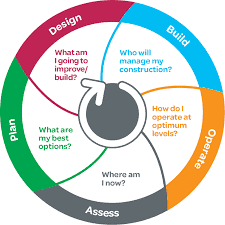
The general phases of data center development are as follows:
- Assessment – In the assessment phase, the developer will first finalize the project’s goals and target audience/customer. They will often conduct site selection, although many experts say that at least the preliminary design should be complete before final site selection.
- Planning – In the planning phase, the developer will outline the parameters that will guide the design process.
- Design – In the design phase, the developer and their chosen design partner (unless it’s an internal design team) will finalize the designs for the data center.
- Construction/Commissioning – In the construction phase, the developer and their general contractor will build the first phase of the facility so that it is ready for operation.
- Operation – In the operation phase, the developer/operator will evaluate whether the facility is performing according to the initial design goals and parameters. If the planned project has multiple development phases, this is where the developer would evaluate how Phase 1 went and what changes are necessary for any future development phases.
8 Steps to Data Center Capacity Planning
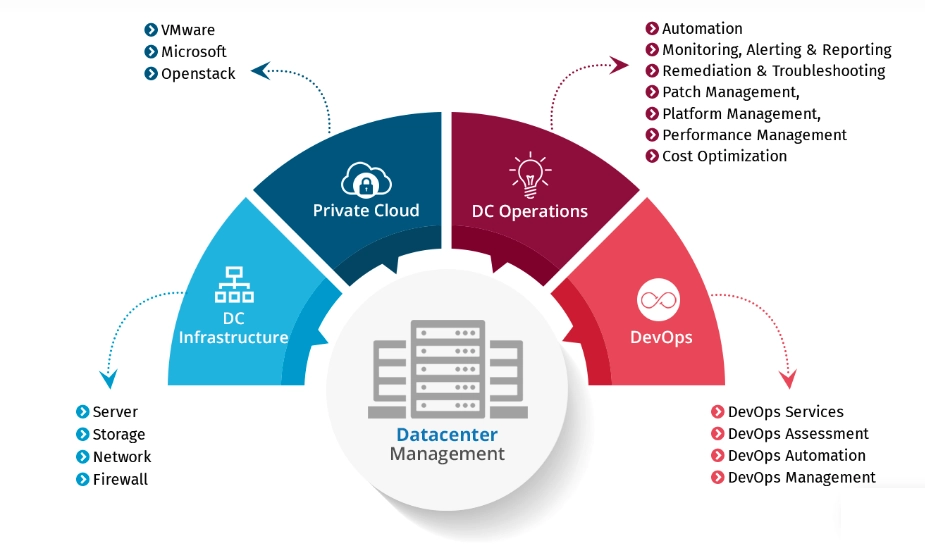
Data center capacity planning not only helps to achieve efficient use of physical infrastructure but also helps to identify potential issues that predict failure to improve efficiency and ultimately deliver quality business services. Let’s look at 8 steps of how you can do it.
Reduce server over-provisioning
Figure out all the components needed for the provision of a new piece of equipment and make use of only what is required. Capacity planning includes data centers to consider rack space, rack power, UPS power, upstream breaker or panel power, cooling, fiber or data port connectivity at the rack, patch panels and switches for usage, and existing capacity.
Identify and repurpose underutilized servers
Evaluate the present level of use of the components and servers needed. Check thoroughly whether each of them is completely used or has extra power. Look and figure out how to leverage stranded space, power, and networking capabilities. After identifying the servers that are underutilized and repurpose them for better usage.
Reduce IT operational expenditures
This task includes ways to reduce operational costs without harming the routine operations of the company. Using data center resources more effectively means using less but more efficient hardware devices than stand-alone distributed servers. The average server in most corporate IT environments is less than 10% utilized and has at least 80% spare disk capacity. The best part is that a study shows that in three to four years, organizations achieve 25% or more in annual savings against their current IT infrastructure costs, even after the capital cost of the changes.
Reduce server downtime
Take these simple actions in order to reduce server downtime:
- Consider the availability of priority data centers – even higher cost minimization.
- Use best practices for data center redundancy to increase availability.
- Allocate sufficient resources for recovery in the event of unplanned downtime.
- Regularly test generators and distribution systems to provide backup power in case of power.
- Regularly monitor UPS battery.
- Implement a DCIM.
Improve server performance and availability
To increase server performance and availability in data center capacity planning in minimal expenses is a need of the hour. After powering a new server, it is very important to check the BIOS settings to ensure correct server configuration. Also, in data center capacity planning, the use of performance monitoring tools should not be avoided in a data center environment.
Improve IT budget accuracy
Knowing where your IT budget is going gives you better hold on the data center capacity planning. Smart planners are able to extend the life of existing facilities by adding extra components over time and by installing flexible hardware e.g. open channel busway systems. You can move further by outlining all the required equipment while measuring the usage level of current equipment. Work on a list of capacity requirements and build a plan of how you will provide for new equipment.
Leverage future technologies like AI
At present, we are noticing the rise of data science, capable of utilizing ridiculously huge amounts of data, processing, analyzing, and making sense of it. Amidst this, data center capacity planning requires performance-boosting and cost-cutting quality givers. Artificial Intelligence brings an array of new possibilities that can facilitate things. It can conserve energy, reduce downtime, optimize workload distribution, enable unmanned automation, improve security.
Audit and update the production DCIM database
DCIM tools offer data center operators the ability to perform productive data center operations and enhance the planning and design of data center infrastructure. Moving further in your data center capacity planning, audit and accept the project, thus updating the DCIM output database to represent the current state of utilization of capacity.
Are you ready for your Data Center Capacity Planning?
There are various advantages of data center capacity management like efficient visibility of infrastructure assets, better management of resources, effective change management process, and integrated monitoring of network, power, and environment. Though, various tools such as bandwidth monitoring and service monitoring are required for achieving the best results in monitoring the data center environments.